Author: Lincoln Wang | Founder & CEO, MindsLeap | Partner and CEO, Founders Space China | Founder, MindsLeap Founders AI Club
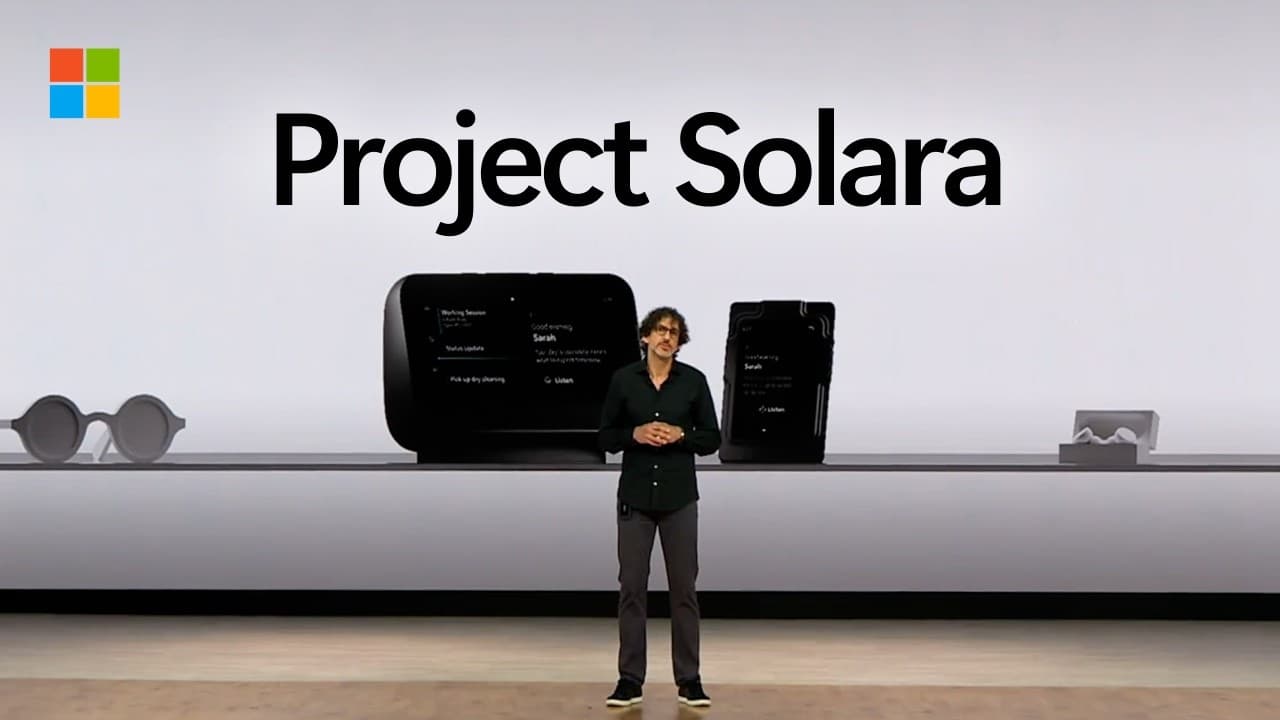
On June 4, 2026, at the main stage of Microsoft Build, Steven Bathiche said something worth remembering:
"The next computer is not a device. It's all of these devices working together as a system, bringing agents to where you need them, when you need them."
This wasn't a product launch. It was a redefinition of the word "computer" itself. If you still think AI's next step is a better Copilot or a faster chat window, this map may already be drawn wrong.
Agents Escaping from Applications
Bathiche's starting point was simple. At Build 2023, he introduced a concept: AI is moving from "inside the app framework" to "running globally" — no longer confined to a single app window, but spanning multiple applications and services, connecting, coordinating, and maintaining context across entire workflows.
Three years later, the question became: if AI has truly stepped outside of applications, what should the device that carries it look like?
Microsoft's answer: don't pick one form factor. Build a system.
The Screen You Don't Need to Open
Bathiche first showed a device sitting on a desk. No keyboard, no mouse. You walk up, Windows Hello recognizes your face, and your personal agent is ready. What appears on screen isn't an app grid — it's "what's the next step in today's work."
You can tap or speak commands to delegate tasks to your agent. It works alongside your Windows PC, or connects directly to Windows 365 cloud PC, turning any monitor into a full desktop environment.
Bathiche said: "Think of it as a protected, context-aware work device that belongs to you."
Its essence? An entry point that doesn't require you to "open an app." Information, plans, execution — all surface proactively from the device, instead of waiting for you to dig through menus.
A Badge on Your Chest
The second device was even more unexpected. It reimagines something millions wear every day: a work badge.
Bathiche pulled out a prototype. Fingerprint unlock, agent ready. The screen showed a to-do: "Collect materials for today's social media posts." He hit record, panned the room with the onboard camera, and said: "Copilot, pick a few good photos from this video, process them, and send them to me and the team for review."
The agent began executing a multi-step task automatically. Shooting, filtering, processing, distributing — the entire process without opening a single app.
This demo was lightweight, but it revealed a critical judgment: agent-driven devices don't need a traditional "operating system interface." Their UI is generated on the fly, dynamically adapting to context, role, and task.
Nurses Don't Need to Look Down at Phones
Bathiche cited healthcare as an example. A nurse picks up this device, and the agent automatically adjusts the experience based on role and workflow: assisting with patient check-in, retrieving records, surfacing key insights. Built-in microphones support hands-free voice documentation, including speaker separation and auto-tagging. Side cameras can record patient vitals, scan medications, and help verify clinical workflows.
"This small, dedicated wearable can bring intelligence directly into patient care workflows, letting nurses capture, collect, and even act on information while staying fully present with the patient."
This is the real problem Project Solara aims to solve: places traditional computers can't reach — factory floors, hospital wards, warehouse aisles, hotel corridors — agents need a physical form.
Microsoft's Three-Layer Strategy
Bathiche revealed three pillars of this approach. The first layer is an enterprise-grade AOSP device ecosystem platform, ensuring security and management. The second is an agent-driven interaction model, where UI is generated based on device form factor. The third is openness — enterprises can bring their own agents. Azure connects everything in the cloud.
He also mentioned that AccuWeather, Best Buy, CBS Health, Levi's, and Target are already exploring this combination of dedicated devices and workflows.
The same base software and reference hardware, swapped with different agents, adjusted screen sizes, and different sensors, can serve retail, industrial, hospitality, financial, legal, and other industries.
A Signal Easily Misunderstood
A natural reaction here is: Microsoft is getting into hardware again, and this time it's all sorts of strange little devices.
But this looks more like a platform strategy than a product strategy. Microsoft isn't trying to build another Surface. What it's offering is reference hardware, a software platform, and an AOSP ecosystem — letting enterprises and developers define the form of their agents themselves. The MediaTek and Qualcomm chip choices hint at this — this isn't a flagship product, it's a scalable framework.
It's too early to say exactly what this means for Chinese hardware manufacturers. But what's certain is: as agents begin running outside of applications, the design authority for device form factors is shifting from "operating system companies" to "scenario definers." Whoever understands a vertical industry's workflows best will have the opportunity to define what that industry's agents should look like.
The Next Question Entrepreneurs Should Ask
Bathiche closed his talk with this: "It's time to imagine where your agent should live, what form it should take, and what new work it can unlock."
This isn't an invitation to build an app. It's asking you: in your organization, what workflows can't traditional computers reach? Where do your employees need to make judgments, execute actions, record information? What fills those gaps today?
If your answer is pen and paper, walkie-talkies, WeChat groups, or some internal system that's been running for ten years — then the signal from Project Solara deserves serious attention.
The next computer might not be on your desk. It might hang from your chest, or be embedded in a corner of your workshop. The key isn't the form factor itself — it's that agents finally have a place to land.
About MindsLeap
MindsLeap is a Chinese AI strategy education brand, dedicated to providing cutting-edge AI insights, strategic perspectives, and organizational transformation services for Chinese enterprise founders and executive teams, helping businesses achieve cognitive leaps and business reinvention in the AI era.
This article was translated and adapted from the Chinese original with AI assistance.