Author: Lincoln Wang | Founder & CEO, MindsLeap | Partner and CEO, Founders Space China | Founder, MindsLeap Founders AI Club
"If David Ricardo woke up today and someone told him that the employment rate for working-age people in 2026 was near an all-time high, he would be shocked."
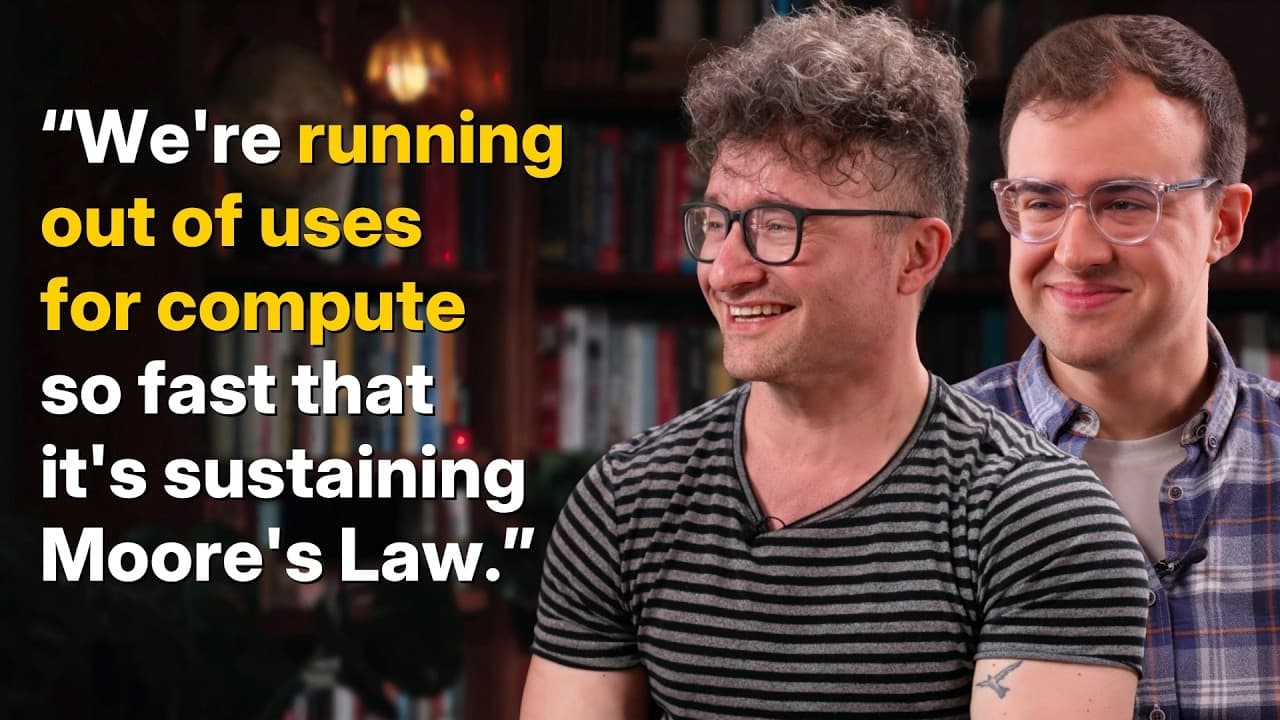
Alex Imas, head of AGI economics at Google DeepMind, made that point on Dwarkesh Patel's podcast. Across from him was Phil Trammell, head of economics at Epoch. Their topic sounded counterintuitive: the better AI gets, the smaller its share of the economy might become. But the most important lesson for entrepreneurs is not the conclusion itself. It is that economists are admitting they are still navigating blind spots.
The Man Who Got the Process Right and the Outcome Wrong
Imas went back to 1820. At the beginning of the Industrial Revolution, classical economist David Ricardo made a series of judgments. Mechanization would reduce prices and benefit everyone. Then he reversed himself. He saw that jobs creating value were being replaced by machines, and he warned of mass unemployment and political turmoil.
Two hundred years later, Ricardo's observation was correct. The jobs he named were indeed automated. But his prediction about the outcome was wrong. Employment in the United States today is near historical highs.
What did Ricardo miss? He missed the key mechanism in the economics of structural transformation: everything that gets automated becomes cheaper, people have more money left over, and they spend that money on services. This is the lump-of-labor fallacy. You assume the amount of work is fixed and automation eats it. In reality, cheaper automation releases new demand.
Imas told this story not to reassure us that history will always solve employment. His point was that predictions of this kind are extremely difficult.
We Do Not Even Have the Basic Data
One of the most striking lines in the conversation was Imas's admission:
"We need a data-level Manhattan Project. We basically do not have data on consumer demand elasticities. We do not know what they are. We are also not truly tracking which jobs are being created and which are disappearing."
He mentioned O*NET, the U.S. Department of Labor database that defines the task composition of occupations. It is updated slowly and with uneven quality. That means when companies and policymakers discuss which jobs AI will replace, the underlying infrastructure is itself rough.
Even more unsettling, economists still debate whether the labor share of income, one of the most basic macroeconomic indicators, has actually fallen. Some scholars argue that with consistent accounting methods, labor's share may not have declined over the past three or four decades.
For a business leader building a three-year strategy, the signal is clear: do not make irreversible organizational decisions based too quickly on macro predictions. Even economists admit that they lack enough data to support certainty.
The Mistake a Mongolian Economist Might Make
Trammell used a vivid thought experiment to show why intuition can mislead.
Imagine a Mongolian economist in 1400. He looks at society and sees that singing is something only humans can do, while horse transportation, yogurt, and yurts are things that can be "automated." If he assumes the set of goods is fixed and asks what happens after automation, he might conclude that spending on horse transportation, yogurt, and yurts will saturate and fall toward zero, and eventually all money will be spent on singers.
That obviously did not happen. As wealth accumulated and machines improved, the boundary of things people could spend money on kept expanding. Spending on singers remained a tiny share of the economy.
The point is this: if you predict the AI economy while only looking at known categories and services, you may severely underestimate how fast new demand and new supply expand. And if you overestimate people's willingness to pay for human interaction, you may be too optimistic that relationship-based industries will dominate the economy.
Trammell's view is that two future paths are possible. Human-interaction services may rise as a share of the economy. Or AI may create new categories fast enough that labor's share ultimately trends toward zero. At the moment, no one can assign confident probabilities.
Buy the Index, Not the Data Center
One practical suggestion in the conversation was aimed at developing countries, but it also applies to companies with limited resources.
The usual advice is to retrain workers, create employment programs, and build domestic data centers. Imas and Trammell offered a cleaner answer:
"Just buy the AGI index."
The logic is simple. If open-source models are only six to nine months behind frontier models, then once AGI appears, almost everyone will gain access quickly. In that situation, Nigeria may not need to build its own data center. It could buy an index of AI companies and share in the gains.
They do not think this is an either-or choice. In a messy middle period where AI does not immediately reach AGI, giving up on retraining or learning to use advanced compute would leave value on the table. But for countries with weak education systems, assuming they will become the world's best at AI retraining is also unrealistic.
The enterprise lesson is this: when a technology diffuses fast enough, owning it may matter less than accessing it. Instead of spending heavily to build infrastructure yourself, you may be better off bringing the best capability into your workflow through investment, partnerships, or procurement. Mobile internet already proved this pattern. AI may accelerate it.
Make AI Hard to Monopolize, Like Electricity
The discussion eventually returned to a deeper question: who captures the wealth AI creates?
Imas made a simple but powerful point:
"If the benefits of AI are hard to monopolize, like electricity, then AI will be much more popular and much more likely to create broad prosperity."
Nobody opposes electricity. Its value is hard for any single company to monopolize, so it becomes a base capability for every industry. If AI can move in that direction, public sentiment toward it will look very different.
Much of the current negative emotion around AI comes from the fact that people can more easily imagine what they might lose than imagine benefits that do not yet exist. It is easier to put someone on a podcast saying that beloved jobs will disappear than to describe a utopia that has not yet arrived.
Trammell added a subtle point. If open-source models remain only six to nine months behind the frontier, that itself becomes a counterweight. It prevents gains from concentrating too heavily in a few labs. It also creates safety risks, because the ability to use AI is spread more widely. But in his view, the broader distribution of gains is likely worth it overall.
The Map Is Opening, but the Signposts Are Not Clear
The most honest part of the conversation was its uncertainty.
Economists are debating whether labor's share will fall, but neither side has enough data. They proposed the concept of relationship-based industries, services where human involvement itself has value, but they also admitted that we lack strong evidence on people's willingness to pay a premium for human presence. They discussed open-source models, retraining, and buying AI indexes, but refused to assign confident probabilities.
For Chinese entrepreneurs, the lesson may not be any single conclusion. It is the way of thinking. Instead of searching for certainty, first identify the variables that determine the future. Labor's share depends on the race between automation speed and new category creation. The competitive landscape depends on whether AI capability concentrates or diffuses. Talent strategy depends on whether the deployment timeline is fast or slow.
The map is opening, but the signposts are still unclear. In that environment, the best strategy may not be to bet everything on one path. It may be to stay sensitive to multiple possible paths. That is exactly what Ricardo failed to do in 1820.
Source Note
This article was interpreted by Lincoln based on Dwarkesh Patel's video The better AI gets, the smaller its share of the economy might get – Alex Imas and Phil Trammell, published on June 4, 2026.
About MindsLeap
MindsLeap is an AI transformation accelerator that helps traditional entrepreneurs find transformation paths in the AI era. In partnership with Silicon Valley incubator Founders Space, MindsLeap connects technology founders with real customers and scenarios, links domestic and international capital with the Silicon Valley technology ecosystem, and supports China's industrial AI transformation and global expansion.
This article was translated and adapted from the Chinese original with AI assistance.