Author: Lincoln Wang | Founder & CEO, MindsLeap | Partner and CEO, Founders Space China | Founder, MindsLeap Founders AI Club
300 years ago, Siemens in Germany built a machine. You lit a fire inside it, and an invisible force emerged from the other end. Nobody knew what it was at the time. Now we call it electricity.
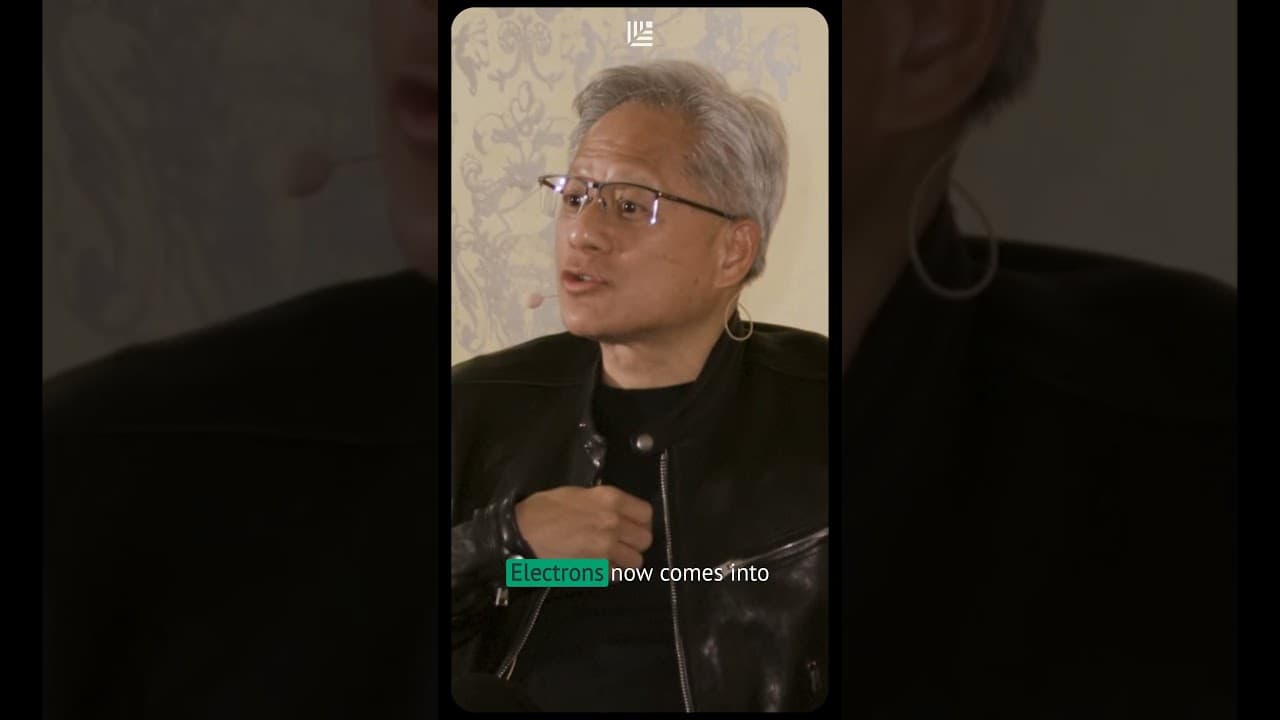
On June 12, Jensen Huang told this story on stage at Sequoia Capital. He didn't talk about GPU architecture or the CUDA ecosystem. He talked about three machines — and one unnamed thing currently wrapping the entire globe.
Three Layers Cocooning the Earth
Jensen said: "The world will be cocooned by a layer of computing that continuously produces intelligence."
This sounds like science fiction, but he gave a very specific historical coordinate. Three hundred years ago, generators first wrapped the Earth, turning energy into a transmittable commodity. Thirty-five years ago, internet protocols wrapped the Earth again, turning communication into a transmittable commodity. Now it's the third layer — intelligence, which will also become a ubiquitous commodity.
These three layers don't replace each other — they stack. First energy, then communication, now intelligence. A factory, an office building, a logistics warehouse — all will be wrapped by this intelligence layer. They'll be filled with AI agents that use the internet, talk to each other, and continuously generate data.
For entrepreneurs, the impact of this judgment isn't about the technology itself, but a corollary: when intelligence becomes infrastructure, it's no longer a differentiating advantage — it's an entry ticket.
A Machine Called a Generator, A Machine Called NVIDIA
Jensen's core metaphor is comparing NVIDIA to a factory.
"The machine invented 300 years ago was called a dynamo. Anything with motion comes in — waterfalls, wind, fire, steam — converted from atomic motion into electrons. Then we send electrons into our machine, called NVIDIA. Electrons go in, numbers come out."
This analogy is sharp because it pulls AI from mysticism back to industry.
What generators do is simple: atoms in, electrons out. What NVIDIA does is equally simple: electrons in, numbers out. These numbers can be recombined into language, mathematics, but also into the language of proteins, human biology, the physical world, climate and weather, 3D worlds, robotics and autonomous driving.
"We call them tokens, but they're just numbers. And these numbers are intelligence."
This is a demystification process. Jensen deliberately used the plainest language to describe the AI factory's essence — it's not magic, it's an assembly line. Input is energy, output is tokens. Tokens are intelligence.
Beyond Language, How Many Other Languages Exist?
But what's truly worth noting isn't that this factory can produce language — it's how many "languages" it can produce.
Jensen listed a catalog: proteins, human biology, physics, climate, weather, 3D worlds, robotics, autonomous driving, various forms of intelligence. This doesn't look like a product roadmap — it looks more like a cognitive map. He's saying all the world's undigitized patterns can be translated into a new language, produced by this factory.
The insight for entrepreneurs isn't "deploy a large model" — it's re-examining which patterns in your industry haven't yet been translated into machine-understandable and generatable language. Manufacturing process patterns? Supply chain rhythms? Customer decision paths? Once these "languages" are translated, they'll be absorbed by this intelligence cocoon wrapping the Earth, becoming capabilities any connected party can call.
When Intelligence Becomes a Commodity
Jensen used a deliberately weighted word: commodity.
"It will just be a commodity, and we'll use it everywhere."
Commodity carries weight in business contexts. It means standardized, substitutable, price-competitive. When you buy electricity, you don't care if it comes from Three Gorges or Daya Bay. When intelligence becomes a commodity, enterprises won't care whether the cloud behind it uses NVIDIA or AMD chips.
This means a power transfer underway: moats are migrating from the compute layer to the application layer. Compute itself becomes a utility, like electricity and broadband. True differentiation depends on what data you feed it, which business processes you let AI agents work in, and where in the customer value chain you embed this capability.
This is also a warning. If an enterprise's "AI strategy" today is merely purchasing compute and deploying models, it's actually hoisting a resource about to be commoditized. This isn't building a moat — it's building a warehouse.
Behind the Factory Metaphor
Jensen repeatedly emphasized the word "factory" — not by accident.
What's the essence of a factory? Scale, standardization, continuous unit cost reduction. When he says "this is what we do, it's not that hard," he's not belittling technical complexity — he's announcing an industrial phase arrival: from lab to production line, from custom to scale.
The practical implication for Chinese entrepreneurs: stop waiting for "AI technology to mature" — it's already past that inflection point. Just like entrepreneurs in 1900 didn't need to wait for "electricity technology to mature," they need to think about where appliances should go in their factories, warehouses, and stores.
Specifically, several questions deserve answering now: Which processes in your organization are being restructured by AI agents? Which data assets are raw materials this "factory" needs? Which parts of your customer value proposition can be redefined by the intelligence layer?
The Map Is Unfolding
Jensen's speeches have a rare restraint. He didn't描绘 a singularity, didn't渲染 threats — he used the plainest industrial metaphor to describe something happening: a factory is running, a new language is being invented, a new cocoon is wrapping the Earth.
For Chinese entrepreneurs, this map's significance isn't telling you how powerful NVIDIA is — it's reminding a more fundamental question: when intelligence becomes a commodity like electricity, what will you do with it?
Three hundred years ago, someone lit a fire to power a generator, and the world was never the same. Three hundred years later, electrons are becoming numbers, numbers are becoming intelligence. This time, the spark isn't in Silicon Valley, nor in any chip company's hands. It's in the hands of every entrepreneur who decides to bring intelligence into their business.
The question was never whether compute is sufficient. The question is: do you know what to feed into this factory?
About MindsLeap
MindsLeap is an AI-native organization transformation accelerator.
In deep partnership with Silicon Valley innovation incubator Founders Space, we continuously connect cutting-edge global AI insights, the Silicon Valley tech entrepreneurship ecosystem, and real transformation scenarios for Chinese entrepreneurs.
This article was translated and adapted from the Chinese original with AI assistance.