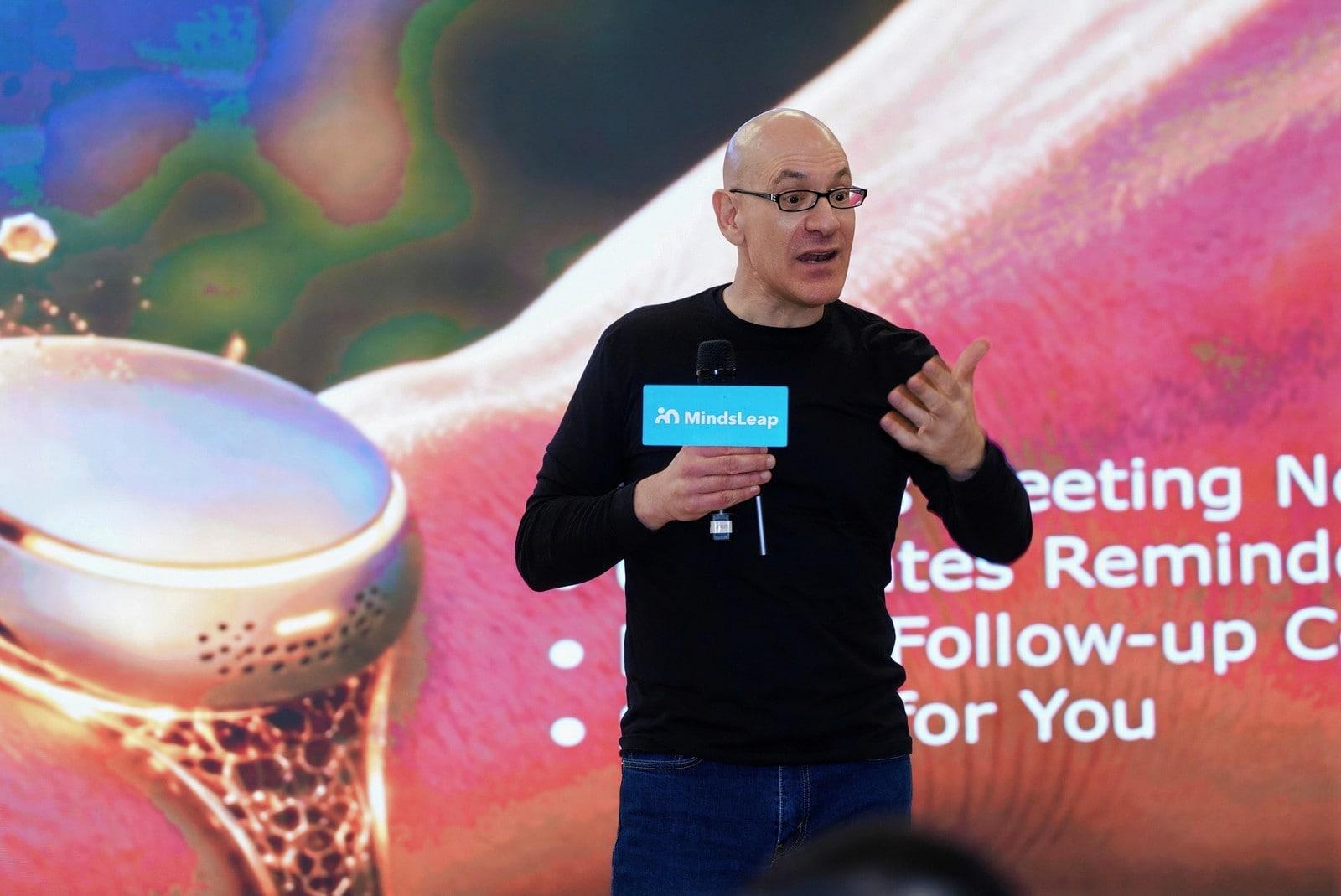
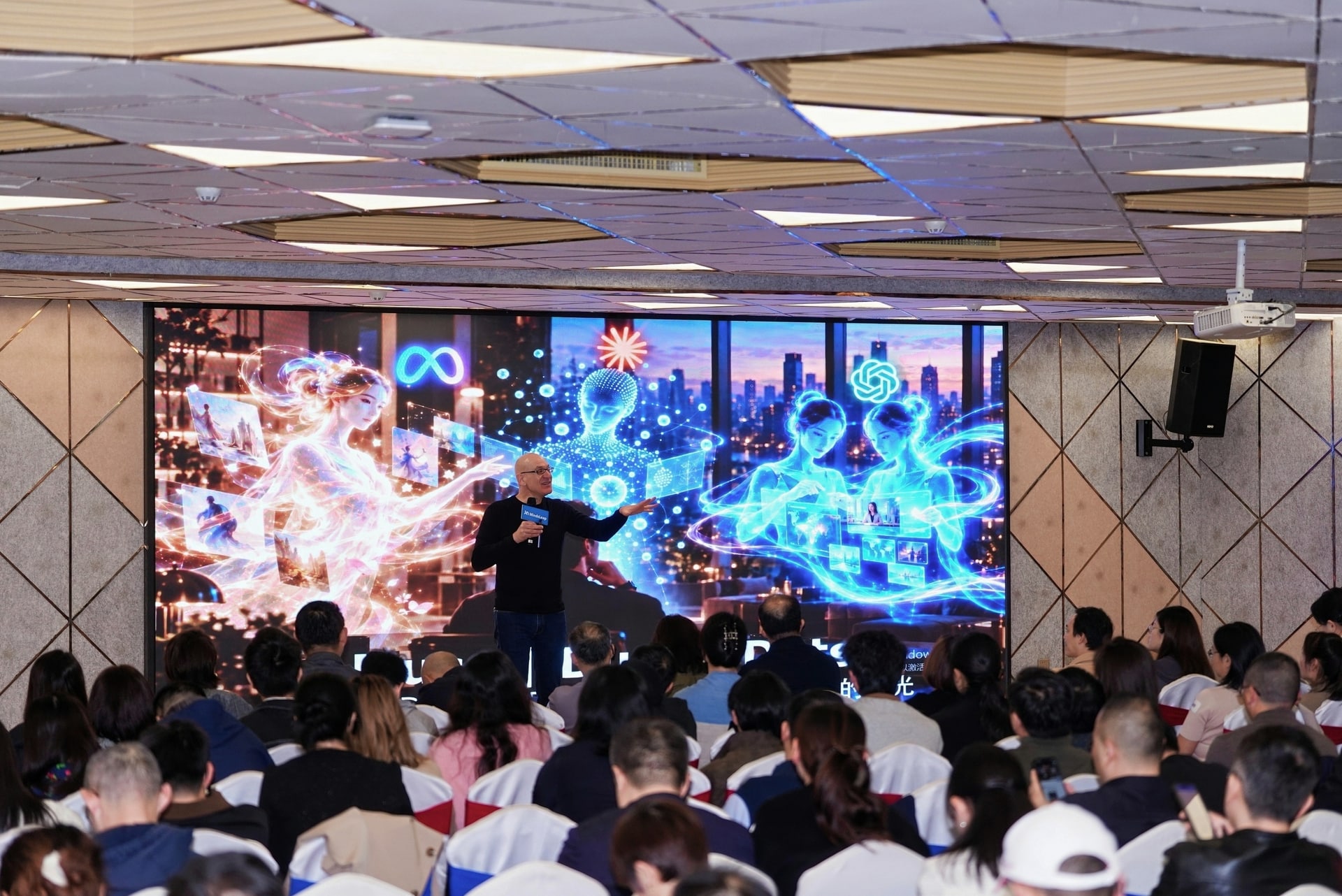
On November 8, 2026, MindsLeap, Silicon Valley incubator Founders Space and Tencent WorkBuddy jointly hosted an AI-Native Innovation and Growth Forum at 盛大天地源创谷 in Shanghai, bringing together more than 200 entrepreneurs.
As AI moves from answering questions to carrying out tasks, the question for business leaders is no longer simply which model is more powerful. It is how AI can enter their operations and create value for their customers. That question connected the day's four sessions.
Steve Hoffman, investor, founder of Founders Space and author of the international bestseller Make Elephants Fly, delivered two sessions on AI opportunities in Silicon Valley and entrepreneurial growth. Lin Jian (林键), Enterprise Product Technology Lead at Tencent WorkBuddy, discussed practical agents. Lincoln Wang (王林), Founder and CEO of MindsLeap, and Partner and CEO of Founders Space China, addressed enterprise AI transformation. Together, the sessions connected global developments with the everyday work of Chinese businesses. The event also received strong support from 新沪商联合会, 盛大天地源创谷, 浦东电商协会 and 高格办公空间.
Enterprise AI Transformation Starts With One Real Task
Knowing AI matters is different from knowing where to begin.
Lincoln outlined a progression: use AI in an individual's actual work, turn effective practices into shared organizational assets, and then explore services and business opportunities designed for an agent-driven market.
The starting point does not have to be a large system. Reconciliation, scheduling, customer follow-up and video production all offer specific tasks to test. Teams need source materials, clear objectives and acceptance criteria, followed by a comparison of time, quality and errors, rather than judging a demonstration alone.
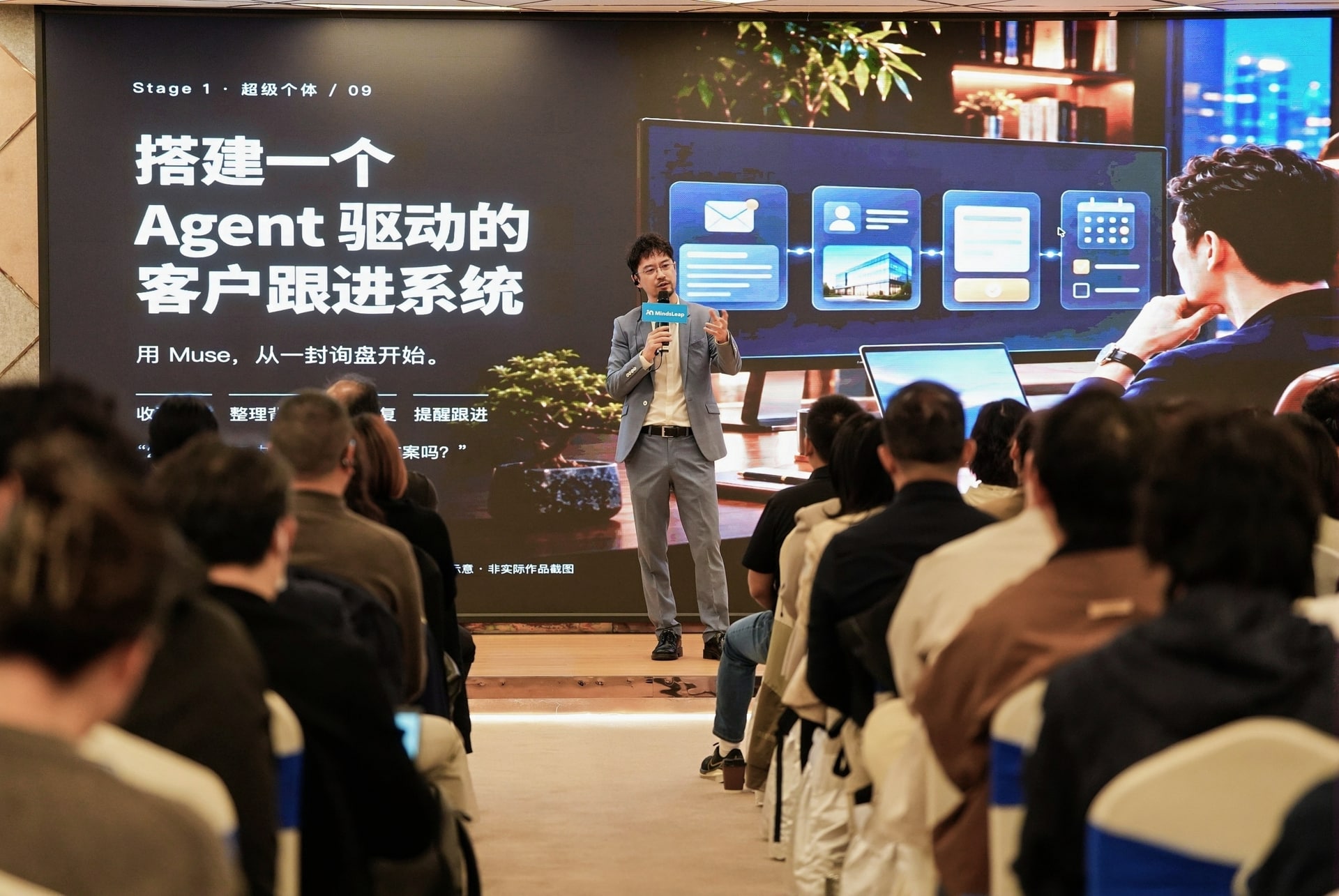
In his customer follow-up demonstration, an agent worked from an inbound registration lead, gathered company background and prepared a reply using existing materials. A person reviewed it before sending. The example showed how information preparation, business judgment and external communication can each have a defined place in the workflow.
Individual productivity also raises organizational questions. Lincoln discussed second brains, shared memory and the maintenance of business rules: who owns a document, which version is authoritative, and which actions require human approval. These foundations help distinguish a useful personal experiment from a practice a team can sustain.
As agents begin searching for, comparing and selecting services on customers' behalf, companies also need to examine their websites and service interfaces. Can their offerings be found and understood accurately? AI transformation therefore concerns both internal operations and how businesses will connect with future customers.
Tencent WorkBuddy: From Answering to Completing
Lin Jian focused on what enables an agent to complete a task.
Models, tools and context need to be organized around a concrete goal. Instructions should include relevant materials, available tools, constraints and a definition of completion. Effective procedures can then become reusable Skills for future tasks and other colleagues.
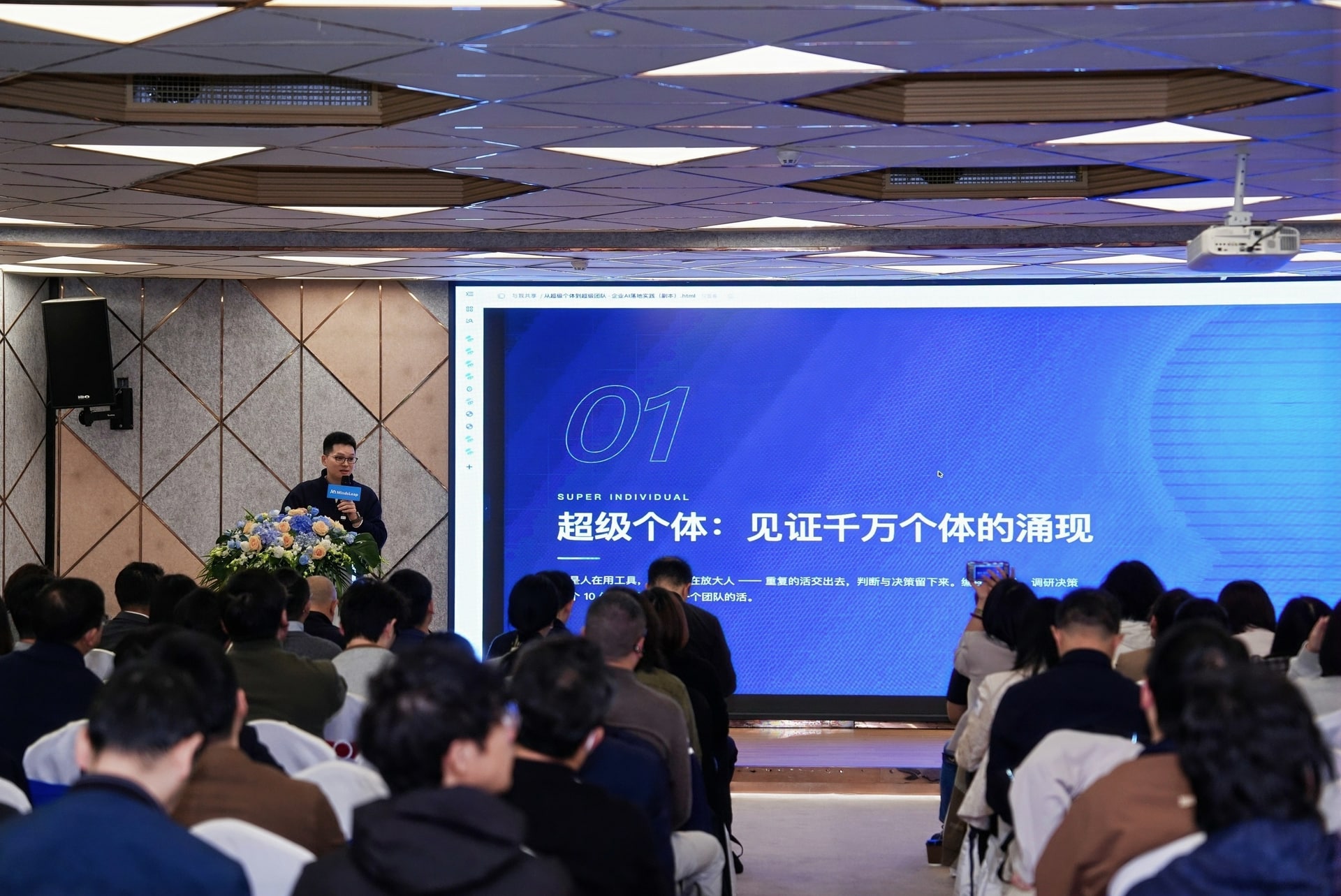
His support-ticket example connected reading a report, searching the knowledge base and identifying a cause with distinct next steps. Known issues could move into a response workflow; product problems could lead to a ticket, a fix and cross-platform testing, with a person deciding whether to release. The resolution record then becomes useful knowledge for the team.
This puts enterprise adoption in more practical terms than simply providing everyone with an account. Tools, knowledge, permissions and review have to connect to the business. Lin also discussed administration, usage boundaries and deployment options, helping participants consider the conditions for reliable operation alongside potential productivity gains.
Steve Hoffman: AI Opportunities Begin With the Result Customers Buy
In the afternoon, Steve Hoffman brought a Silicon Valley perspective to AI innovation.
His discussion ranged from robotics and agents to the different positions of model companies and opportunities in vertical industries. Across these topics, the recurring questions were why a customer would pay and what a product actually delivers.
He used examples including laser weeding in agriculture, retail shelf inspection, customer-service agents connected to business systems and expert knowledge services for training data. Despite their differences, these examples make the buyer, the problem and the measure of delivery quality explicit.
For robotics, Hoffman emphasized that equipment prices are only part of the decision: reliability, downtime, maintenance and task coverage also matter. For agents, he discussed how workflows and data can accumulate long-term value, alongside permissions, migration and human takeover.
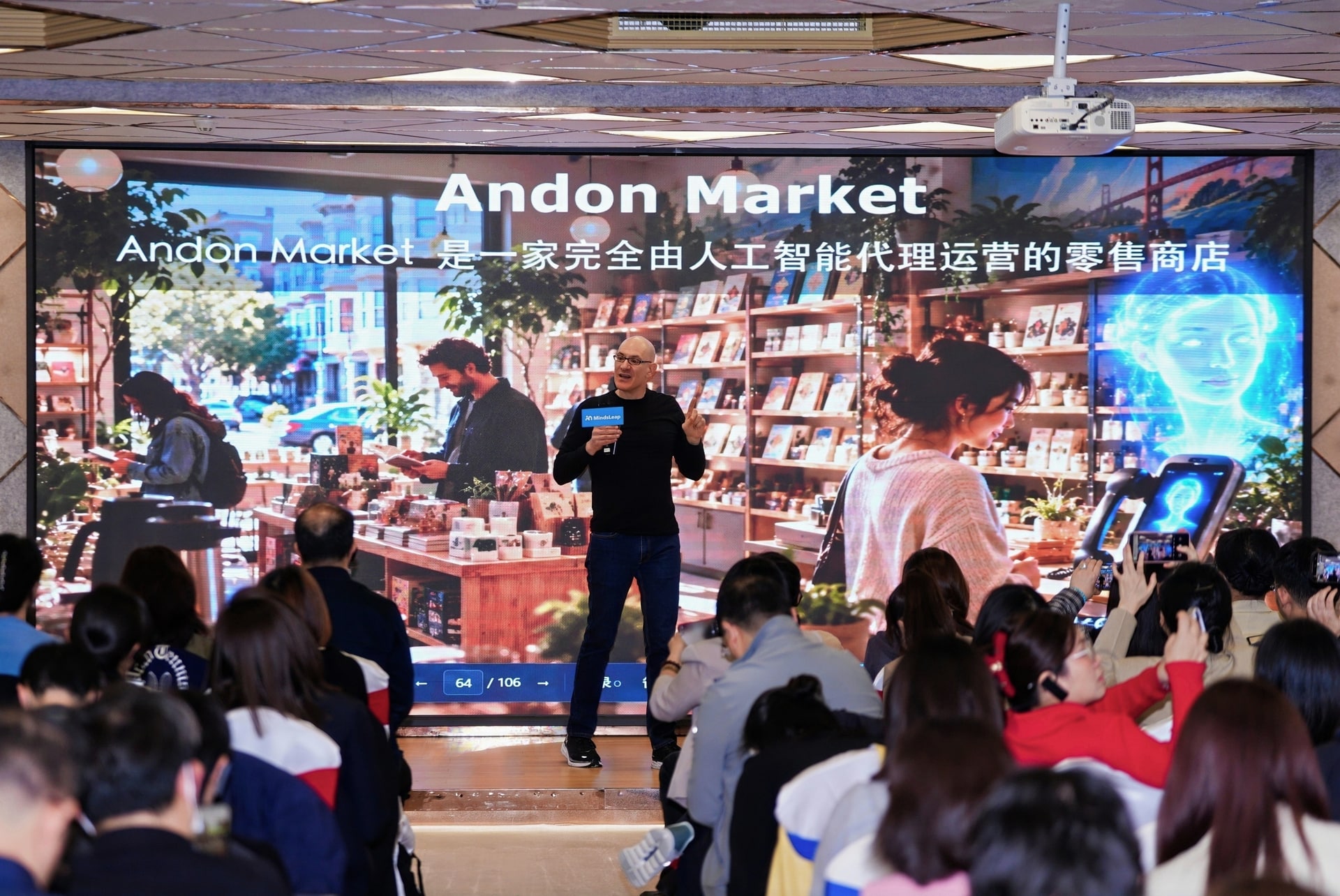
For Chinese entrepreneurs, the value was not a list of Silicon Valley ventures to copy. It was a way of assessing opportunities: start with work that already costs customers time or money, establish whether technology improves the result and reliability, and then test an appropriate business model.
From Customer Demand to Sustainable Growth
Hoffman's second session returned to entrepreneurial fundamentals: demand, sales, product decisions and financing.
Finding demand requires entering the customer's business. Instead of starting a first meeting with a feature presentation, founders should understand why the customer agreed to meet, what matters most to them and whether the company can genuinely help.
Sales progress also requires more than an expression of interest. Teams need to identify the decision-maker, the next action, its owner and a date for a response. Asking why a deal was won or lost brings learning back to product, sales and support.
Hoffman cautioned against allowing repeated discounts or a single customer's customization requests to control the roadmap. A stronger foundation is a business customers continue using because it continues creating value. Financing should serve the company's stage and growth path, rather than become the purpose of entrepreneurship.
These observations complemented the morning sessions. Technology changes how work can be done, but understanding customer needs, organizing delivery and taking responsibility for decisions remain leadership tasks.
Bringing Global Perspectives Into Local Practice
The four sessions placed Silicon Valley's technology and entrepreneurship perspectives alongside Tencent WorkBuddy's product practice and MindsLeap's approach to enterprise AI transformation.
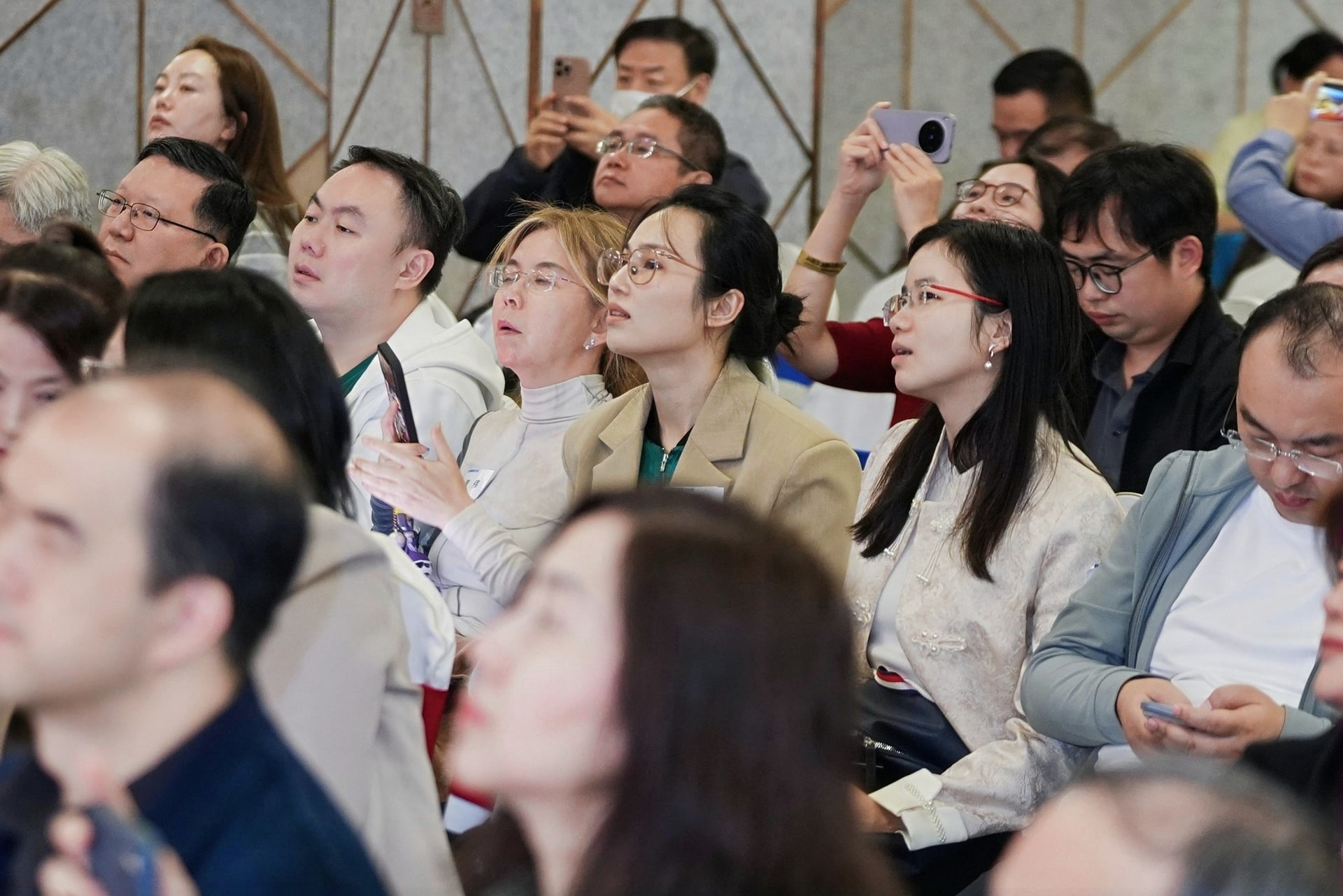
More than 200 entrepreneurs participated actively through listening, note-taking and interaction. The event received extensive positive feedback, reinforcing the value of conversations that help business leaders make decisions and find a starting point, rather than simply introduce more terminology.
Connecting China and Silicon Valley means more than bringing overseas perspectives to a Chinese audience. It means comparing innovation experience with the real needs of Chinese businesses. Understanding a trend, breaking down a use case and selecting one task to test can make the next step more tangible.
For MindsLeap, the forum is part of continuing work through company visits, focused discussions, peer learning and workflow co-creation. The aim is to help entrepreneurs retain a global perspective while bringing practical experiments back to their teams and advancing enterprise AI transformation in China.
Learn more about the MindsLeap Founders AI Club and connect AI developments with the work of your own business.
About MindsLeap
MindsLeap is an enterprise AI transformation and AI-native startup acceleration platform. Through the MindsLeap Founders AI Club, AI training and strategic advisory, FDE implementation, startup acceleration, and global growth services, MindsLeap helps traditional enterprises embed AI into real business workflows and helps AI-native ventures connect with industry use cases and global markets. MindsLeap is a global partner of Founders Space.
Session coverage is based on the four event summaries. Discussion of startup financing and investment reflects the speakers' perspectives and does not constitute investment advice.